


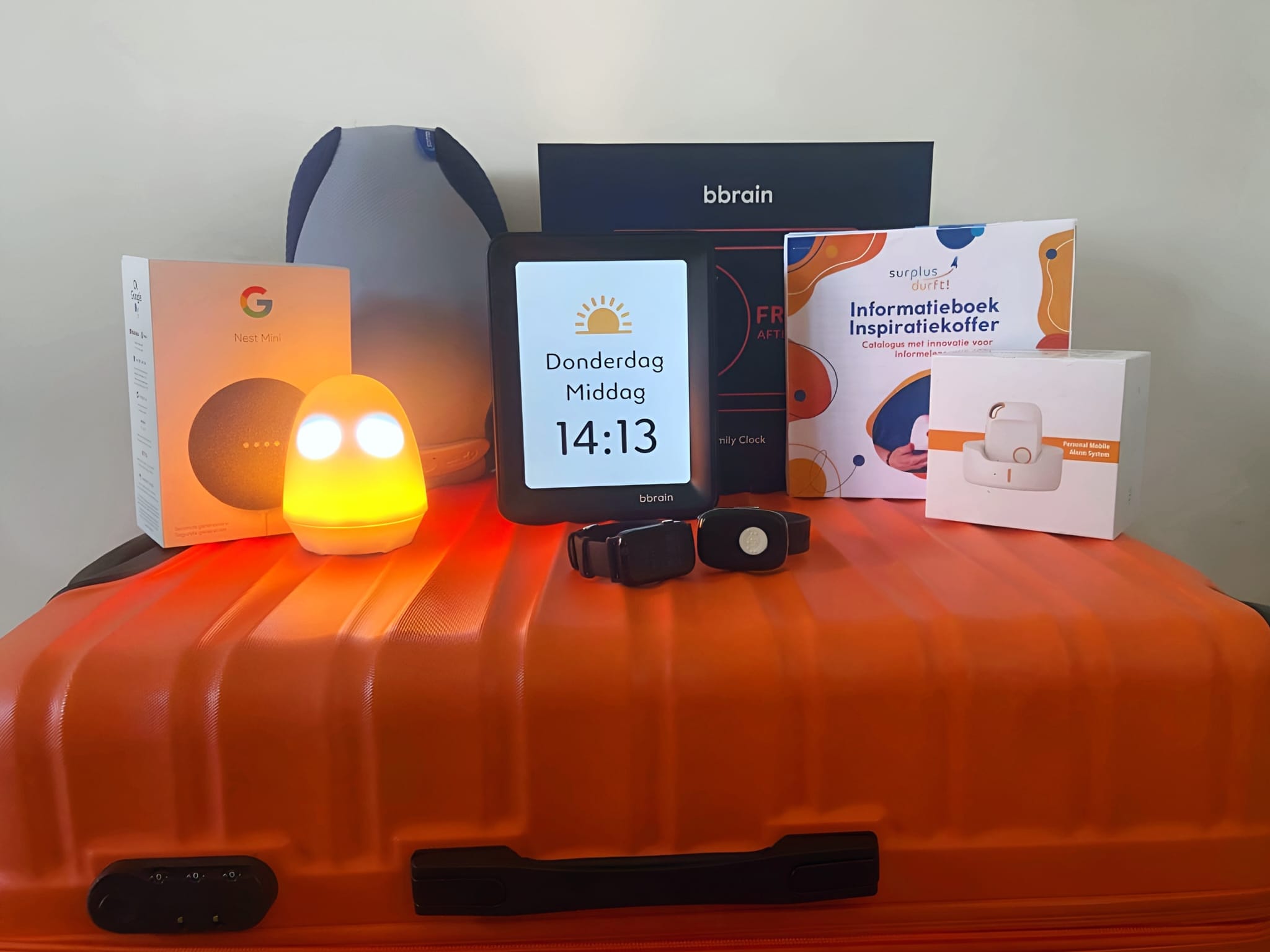
As a caregiver, you are there for your loved one on a daily basis. You care with love, but the care can also be intensive and exhausting. Fortunately, there are more and more smart tools that can support you. These technologies not only help your loved one, but also offer you as a caregiver peace of mind, an overview and space for yourself. Surplus' Innovation team is happy to explain more about the possibilities:
What are smart tools?
Smart tools are technological solutions that provide support for everyday tasks. Think of tools that monitor health, provide structure in the day, increase safety, improve sleep or facilitate independent living. They come in many forms: from apps to devices, from watches to sensors.
Examples of smart tools
1. Health and medication
A smart blood pressure monitor automatically stores readings in an app. That way you no longer have to keep track of anything manually. Does your loved one have trouble taking medication? Then the Medido is a godsend. This smart device indicates when it's time to take medicine and automatically delivers the right bag of medicine.
2. Planning and daily structure
A fixed daily structure gives peace of mind. There are several apps available that help remind your loved one of tasks or appointments. The BBrain talking calendar clock, for example, helps plan the day and lets family members send messages remotely. For family caregivers who share care, there are handy apps that allow you to coordinate tasks among yourselves.
3. Safety
Smart tools increase your loved one's safety. Think sensor lights that automatically turn on in the dark or an SOS button your loved one can press in an emergency. Some smart watches even offer location tracking so you know where your loved one is.
4. Sleep and well-being
A good night's sleep is essential to your loved one's well-being. The Somnox is a smart sleep robot that ‘breathes’ with you. By guiding your breathing at a gentle pace, this robot helps your loved one relax, fall asleep faster or get back to sleep after waking up. There are also several apps that provide insight into stress levels. These can help to better recognize and address moments of stress. A more relaxed loved one often means more rest for you as a caregiver, too.
5. Independent living
Independence contributes to your loved one's self-confidence. The CookingApp allows them to follow a recipe step by step by themselves, allowing them to cook independently without your help. Does your loved one often lose items, such as keys or wallet? Smart trackers can be easily attached to these items and help find them via an app. Some trackers are also equipped with an SOS button. This allows your loved one to request immediate help from you or another caregiver in case of an emergency or if he or she loses his or her way.
What do these tools mean for you as a caregiver?
Smart tools don't replace the caregiver, but they can make life a little easier. They allow you to check less, answer fewer questions and worry less. That gives space: to take a breath, to do something for yourself, or simply to better sustain care in the long run.
How do you introduce smart tools to your neighbor?
Leveraging technology does not always come naturally. Some people find it exciting or uncomfortable. That is why it is important to involve people with whom your loved one has a close relationship. Someone familiar makes it easier to try something new.
Make it a fun activity! For example: setting up a smart watch with your grandson or trying out an app with a neighbor. By doing it together with someone close, it becomes not a technical challenge, but a fun moment of connection. That way your neighbor experiences it as something fun instead of something that ‘has to be done.
The earlier your loved one is introduced to smart tools, the better. Especially for people with memory problems or incipient dementia, it is valuable to start on time. That way they can benefit from them for as long as possible.
In conclusion:
Smart aids can be a valuable addition in informal care. They provide relief, give peace of mind and contribute to your loved one's independence. And the great thing is: you are not alone. Use the power of your network and discover together how technology can make caregiving easier.
Want to use smart tools, but not sure how? We'd love to think with you! Mail to mantelzorg.oosterhout@surplus.nl

